#InsurTech
#SpecialtyInsurance
#MarineInsurance
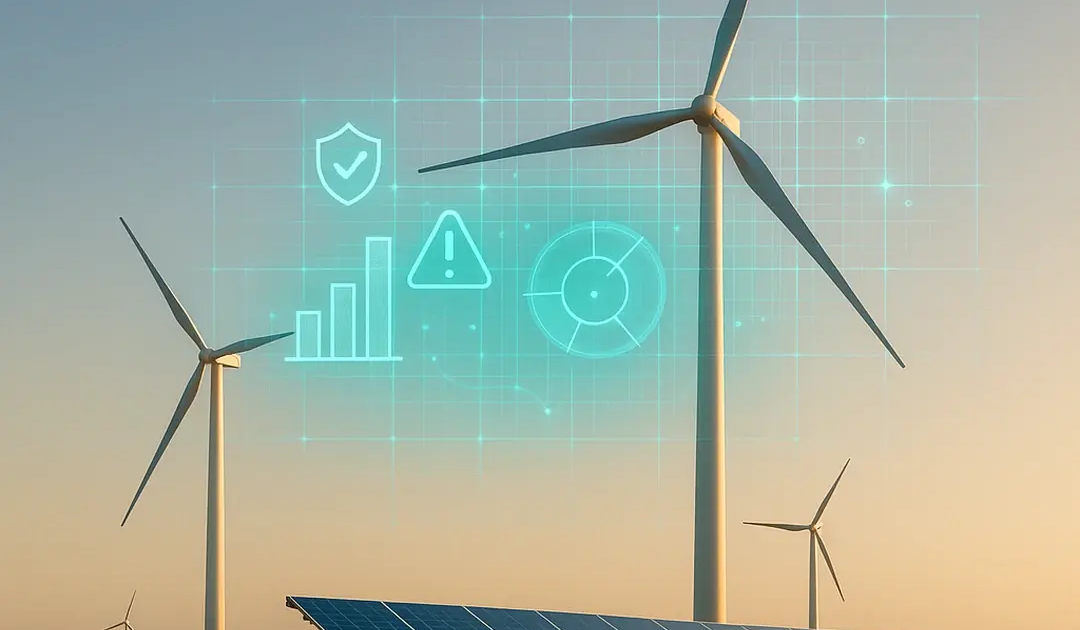

The global transition to renewable energy is accelerating at an unprecedented pace. Solar capacity is growing exponentially, wind energy is becoming cost-competitive with fossil fuels, battery storage is enabling grid stability, and emerging technologies like green hydrogen and advanced geothermal are moving from pilot projects to commercial deployment.
Yet at the very moment this green energy transition is taking off, the insurance industry faces a critical problem: available insurance products are lagging behind the technologies they're supposed to protect.
The result is an "insurance gap"—a widening disconnect between the risks that renewable energy projects face and the insurance products available to manage them. This gap is becoming a significant bottleneck for renewable energy investment and deployment.
The numbers are staggering:
This growth represents both an unprecedented opportunity and an unprecedented challenge for insurance.
Insurance for energy infrastructure developed over decades. Policies were built for:
These traditional energy insurance products are based on:
Renewable energy projects—particularly new technologies—don't fit this paradigm.
When a technology is brand new, there's no historical data on failure rates, claim severity, or loss patterns. Consider:
Advanced Battery Storage: Utility-scale battery storage systems are rapidly expanding, but the technology is still relatively new. What are the real failure rates? How often do thermal runaway events occur? What's the typical cost of remediation? Underwriters are still learning through experience.
Floating Offshore Wind: Floating platforms that anchor wind turbines in deep water represent a technology frontier. How do they perform in different sea states? What maintenance requirements emerge in practice? What's the real weather risk? Limited operational history means limited claims data.
Green Hydrogen Production: Electrolyzer systems that produce hydrogen through electrolysis are moving into commercial scale. What are the actual operating challenges? How often do systems underperform? What safety issues emerge in practice? This technology has almost no insurance history.
Advanced Geothermal: Enhanced Geothermal Systems (EGS) that can operate in locations without traditional geothermal resources are beginning commercial deployment. What are the induced seismicity risks? What subsurface challenges occur? What are real-world operating costs? Limited history creates underwriting uncertainty.
Without historical claims data, underwriters are forced to price risk based on theory rather than experience. This typically results in either excessive conservatism (high premiums) or inadequate pricing (leading to adverse selection).
Renewable energy technology is evolving rapidly. A solar panel model from five years ago is significantly different from current models. Wind turbine designs are constantly improving. Battery chemistry is advancing. Control systems are becoming more sophisticated.
This rapid evolution creates an underwriting challenge: what you know about risk from equipment installed five years ago may not apply to current equipment. Yet insurance policies often don't account for these differences.
A policy written for "solar photovoltaic systems" might cover a specific panel technology with understood failure rates, but the next generation of panels with different materials, different operating characteristics, and different failure modes might not be adequately covered.
Renewable energy systems often involve complex supply chains and multi-party responsibility:
For solar installations:
When a solar array underperforms or fails, determining responsibility can be complex. Is it a panel defect (manufacturer's responsibility)? An installation error (installer's responsibility)? An operational failure (operator's responsibility)? Environmental damage (weather event)? Coverage often depends on correctly assigning responsibility.
For wind turbines:
Similar complexity applies to wind energy—determining who is responsible for failures can be challenging, and insurance coverage often depends on this determination.
Renewable energy equipment supply chains are complex and often global:
Recent geopolitical developments have highlighted supply chain vulnerability:
Insurance products haven't caught up with supply chain complexity. Traditional equipment insurance focuses on loss after equipment arrives at the site. But supply chain disruptions, delayed equipment delivery, and quality issues from alternative suppliers represent emerging risks that traditional policies don't address.
Renewable energy output depends heavily on environmental conditions:
These environmental factors affect both the ability to generate power and the longevity of equipment:
Insurance products need to account for these environmental factors, but coverage often doesn't explicitly address them.
Individual renewable energy systems often integrate with broader grid infrastructure:
Failures can cascade:
Insurance hasn't fully addressed these system-level risks. Policies typically focus on individual asset protection rather than integration and cascade risk.
The insurance gap manifests in several ways:
Underinsurance: Projects proceed with inadequate insurance coverage because available products don't address all relevant risks. When losses occur, they exceed coverage, creating financial distress.
Delayed Projects: Developers struggle to obtain adequate insurance and delay projects waiting for products to catch up. Capital remains uninvested, and clean energy deployment lags.
Excessive Premiums: For technologies where underwriters lack confidence, premiums are priced conservatively. This reduces project returns and makes marginal projects economically unviable.
Coverage Disputes: When losses occur under inadequate policies, disputes emerge about whether losses are covered. This creates litigation risk and reduces the ability to quickly recover from losses.
Innovation Hesitation: Advanced technologies face even larger insurance gaps, discouraging investment in innovation and keeping renewable energy deployment focused on mature technologies.
Insurance carriers face genuine challenges in addressing the renewable energy gap:
Expertise Gaps: Underwriting specialists trained on fossil fuel infrastructure don't automatically understand renewable energy. Building expertise in new technologies takes time and investment.
Organizational Structure: Large insurance carriers often organize around established lines of business. Creating new products requires organizational change and investment.
Risk Model Uncertainty: Without historical claims data, building actuarial models is challenging. Underwriters must either wait for experience to accumulate or make educated guesses about pricing.
Technological Pace: The pace of renewable energy technology advancement can exceed the pace of insurance product development. By the time a policy is written and launched, the technology landscape has shifted.
Market Size Uncertainty: Is the market large enough to justify the investment in developing new products? Carriers may wait to see if renewable energy insurance becomes a large enough market segment.
Developers, operators, and investors in renewable energy projects need insurance that covers:
Mechanical Breakdown: Equipment failures during normal operation, with coverage for repair or replacement costs and business interruption.
Environmental Damage: Damage from weather events, natural disasters, and environmental conditions beyond the operator's control.
Performance Shortfall: Coverage for situations where installed capacity fails to generate expected power due to equipment failure or system issues.
Supply Chain Disruption: Coverage for delays in obtaining equipment or quality issues with replacement equipment.
Grid Integration Risk: Coverage for losses caused by integration issues with grid infrastructure or other renewable energy systems.
Technology Evolution: Coverage that remains relevant as equipment and technology evolve over time.
Warranty and Defect Coverage: Clear coverage for manufacturer defects and warranty disputes.
Regulatory and Compliance Risk: Coverage for changes in regulatory requirements that affect project operation or economics.
This is where AI-powered intelligence becomes valuable. Rather than waiting for historical claims data to accumulate, AI systems can:
Analyze Emerging Technologies: Study the technical specifications, design details, and operational characteristics of new renewable energy technologies to assess risk patterns.
Synthesize Expert Knowledge: Combine expert knowledge from engineers, operators, and technology manufacturers with insurance principles to develop informed underwriting approaches.
Model Potential Loss Scenarios: Create scenario models of what could go wrong with new technologies and estimate potential loss magnitude and frequency.
Identify Risk Factors: Recognize which factors (location, environmental conditions, supply chain characteristics, technology maturity, operator experience) correlate with higher or lower risk.
Support Rapid Product Development: Accelerate the development of insurance products by providing data-driven analysis that reduces underwriting uncertainty.
Enable Continuous Learning: As operational experience accumulates, AI systems can continuously update risk assessments and improve pricing.
Bridge Expertise Gaps: For carriers without deep renewable energy expertise, AI can provide intelligent analysis to support underwriting decisions.
Consider underwriting a solar farm project:
Traditional Approach:
AI-Enhanced Approach:
This AI-enhanced approach provides better risk assessment, more appropriate coverage, and better pricing—all while supporting faster decision-making.
The renewable energy insurance gap won't close through inaction. It will require:
Innovation from Insurance Carriers: Developing new products specifically designed for renewable energy risks, with coverage that addresses emerging technologies.
Investment in Expertise: Building specialized underwriting expertise in renewable energy technology and risk management.
Collaboration with Technology Providers: Working with equipment manufacturers, developers, and operators to understand real-world risks and operating experience.
Adoption of AI and Advanced Analytics: Using technology to accelerate risk assessment and product development beyond what manual approaches can achieve.
Regulatory Support: Encouraging development of industry standards and best practices that reduce underwriting uncertainty.
The renewable energy transition is happening with or without adequate insurance. But projects with inadequate insurance face greater financial risk, higher costs, and slower deployment. Closing the insurance gap will accelerate clean energy investment and deployment.
Is your organization struggling with renewable energy insurance? Visit https://sagesure.io to explore how AI-powered intelligence can help insurers understand and cover renewable energy risks more effectively, enabling faster product development and better-informed underwriting decisions.