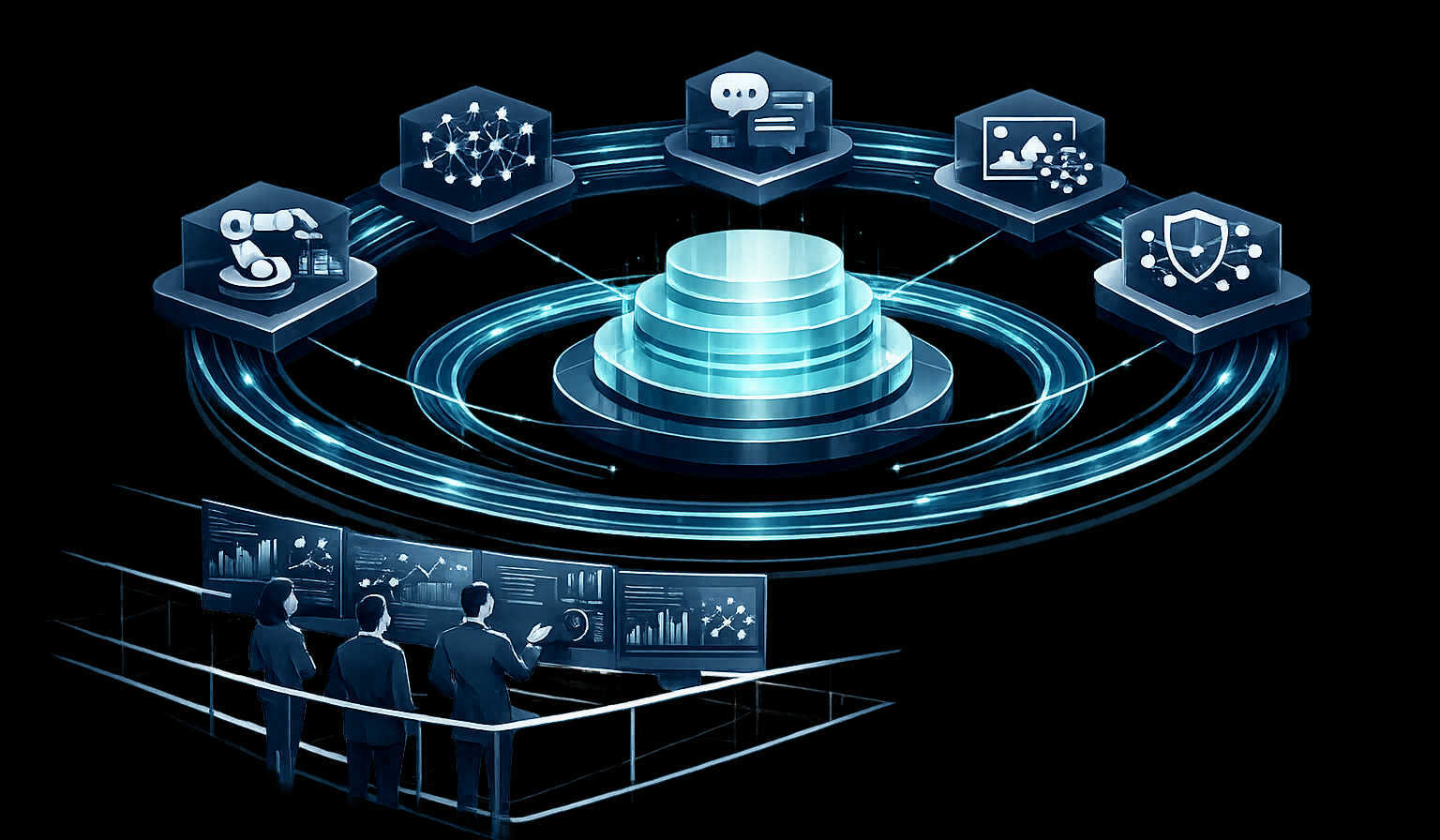
How CDPs and AI agents fuse to deliver real-time, privacy-first personalization.
Unifying data for real-time decisions without breaking compliance
Most enterprise marketers don’t suffer from a data shortage—they suffer from a decision shortage. Customer Data Platforms (CDPs) promised a unified profile, but value only materializes when unified data drives timely actions.
The next-generation stack pairs a CDP’s identity resolution and event pipelines with AI agents that can reason over context and execute playbooks in real time. The core shift is architectural: events stream from product, web, mobile, support, and commerce systems into the CDP, which maintains consent-aware profiles and segments.
An agent layer subscribes to these events, retrieves relevant context, chooses the next best action, and triggers activation across channels. Done right, the pattern turns static audiences into living, testable decision systems.
Start with the data foundation. Reliable identity stitching and governance trump fancy models on noisy data. Practical guides emphasize consent, lineage, and minimization as prerequisites for activation at scale. For a concise overview of AI risk governance that complements consent-aware activation, see NIST AI RMF.
For marketing leaders benchmarking the ROI of personalization, McKinsey finds that AI-driven programs can materially lift revenue and reduce acquisition costs when built on clean, connected data and disciplined testing (McKinsey). Adobe/Forrester likewise highlight that real-time activation hinges on unified profiles and event pipelines (Adobe & Forrester).
From a compliance standpoint, marketers must operationalize privacy—purpose limitation, regional residency, and subject rights—within the stack, not as an afterthought. ISO/IEC 42001 provides a management system blueprint for AI governance that can sit alongside privacy and security standards (ISMS.online).
The lesson for SageSure’s ICP—insurers, SaaS, and retailers—is clear: the CDP enables consent-aware, real-time decisioning; the AI agent turns that decision into action with a transparent log of why it acted, what evidence it used, and what outcome it produced. This is the bridge from “more data” to “better decisions.”
Orchestrating journeys: agents that act, measure, and learn
With the foundation in place, the orchestration layer is where value compounds. Think of agents as policy-compliant operators that translate signals into decisions and decisions into measurable outcomes. They ingest an event (e.g., cart abandonment, claim update posted, feature milestone reached), retrieve the customer’s consented profile from the CDP, evaluate business policy and eligibility, select an action (message, offer, task creation, escalation), and execute it across the right channel with copy adapted to intent and risk level.
Crucially, agents also write back telemetry: what was sent, to whom, with what rationale, and what happened next. That feedback loop powers rapid experimentation. Effective orchestration pairs simple heuristics with selective machine learning. For many journey nodes—renewal reminders, onboarding nudges, claim status updates—rules plus guardrails outperform overfit models.
Where the decision surface is complex, supervised models (propensity, uplift) help allocate scarce actions. Industry sources stress that success depends on designing actions around moments that change decisions, not vanity clicks. See McKinsey’s “Next Best Experience” for case patterns and metrics (McKinsey).
For operational reliability, build on progressive delivery: feature flags, canary rollouts, and blue/green releases. HashiCorp’s primer on zero-downtime deployments adapts neatly to agent updates (HashiCorp), while Harness details canary patterns marketers can understand (Harness).
In practice: a SageSure-designed agent monitors policy lifecycle events in insurance (FNOL submitted, adjuster note added) and triggers tailored, consent-aware messages via email/SMS while creating CRM tasks for high-risk cases. In SaaS, when a power user hits a milestone but the executive sponsor is disengaged, an agent escalates to a CSM with a context pack and drafts an executive update. In retail, the agent blends CDP segments with inventory-aware recommendations to reduce out-of-stock frustration. Every action is logged to the CDP and analytics store, enabling lift measurement and rapid iteration.
Operating model, risks, and a roadmap to scale safely
Operating at scale requires a playbook that blends architecture, governance, and org design.
- Roles and RACI: Marketing owns the “what and why”; data/IT own the “how safely.” Establish a council spanning marketing, data, security, and legal to approve new agent behaviors.
- Controls by design: Enforce least-privilege data access for agents, PII minimization, and channel frequency caps. Maintain model cards and decision logs for audit.
- Vanta and TrustCloud provide accessible overviews for aligning enterprise controls to emerging AI standards (Vanta; TrustCloud).
- Measurement: Go beyond open rates. Track incremental revenue or cost-to-serve reduction via controlled experiments. Attribute impact to journey nodes, not channels.
- Safety and observability: Instrument latency, error rates, drift, and cost per action. Splunk’s observability primers translate well for marketing ops teams (Splunk).
Roadmap:
1) Unify high-value data and consent in the CDP;
2) Deploy agents in “read-only shadow mode” to benchmark;
3) Move to supervised actions in a few journey nodes with hard stop-loss thresholds;
4) Scale to additional nodes with continuous testing.
For SageSure clients, this approach compounds value while protecting brand trust. It also avoids the common trap of overbuilding models atop fragmented data. The destination is not “1:1 personalization everywhere” but “reliable, auditable decisions in moments that matter.”